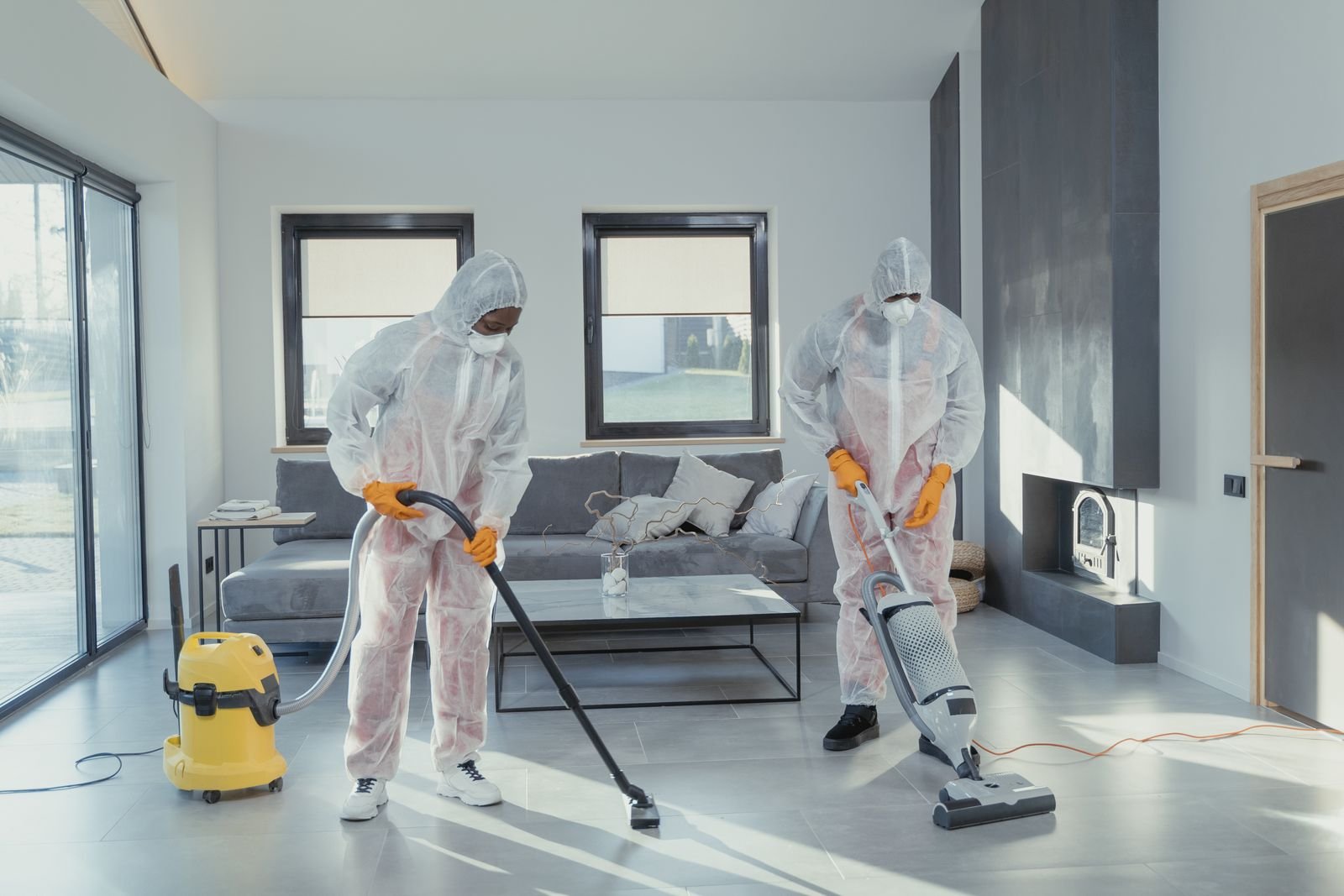
When you need professional water extraction
Burst or leaking pipes, appliance overflow, storm and roof-leak flooding, basement or crawlspace flooding, and sewage-adjacent backups all call for professional extraction. (A sewage-contaminated backup is a distinct specialty from standard water extraction — we differentiate the two rather than treating them the same.)
What to do in the first hour
Shut off the water source if safe. Keep people away from standing water near electrical outlets or panels. Don’t attempt to extract large volumes with a household shop-vac. Call a professional immediately, and photograph the damage for insurance if it’s safe to do so.
Why DIY extraction falls short
Household wet-vacs and shop-vacs aren’t rated for large water volumes and don’t reach water that has already migrated into subfloor, carpet padding, and wall cavities. Incomplete extraction is the single biggest reason mold shows up days later.
Our water extraction process
We assess the scene, identify the water category (Category 1, 2, or 3), extract with truck-mount or portable pumps and extractors, map moisture to confirm all standing and absorbed water is removed, and hand off to structural drying.
Insurance claim assistance
Extraction volume, affected materials, and moisture readings are recorded to support your claim. We don’t provide legal or insurance advice.
Water category classification
Category 1 is clean supply-line water. Category 2 is gray water from appliances, slightly contaminated. Category 3 is black water — sewage, floodwater, or contaminated groundwater — and each category requires different extraction and PPE protocols.